


How to cut a circular notch in a rectangular tube?
2026-04-10
In mechanical processing and pipe installation, it is frequently necessary to cut circular notches into rectangular tubing to facilitate the installation of fittings or the routing of cables and lines.
Since rectangular tubing features a square cross-section while the required notch is circular, the cutting process must prioritize both positional accuracy and edge neatness. First, the center point and cutting contour must be marked precisely; a compass, template, or projection tool can be used to trace the circular outline onto the tube surface, ensuring that the dimensions and positioning strictly adhere to design specifications.
Cutting techniques generally fall into two categories: manual and mechanical.
Manual methods—such as using an electric drill, hacksaw, or grinding wheel—are suitable for thin-walled rectangular tubing. While offering operational flexibility, these methods provide limited processing precision and typically require subsequent grinding and finishing to smooth the edges.
Mechanical methods—such as CNC milling, laser cutting, or plasma cutting—are better suited for processing thick-walled tubing or applications requiring high precision. These methods ensure a smooth cut surface and accurate dimensions while minimizing thermal deformation. Following the cut, it is typically necessary to deburr and finish the edges to prepare them for subsequent welding or the installation of fittings.
The applications for cutting circular notches into rectangular tubing are extensive. Common scenarios include pipe interfaces within structural steel frameworks, access holes for routing cables or lines within mechanical frames, and assembly holes required during the fabrication of furniture or equipment.
Since rectangular tubing features a square cross-section while the required notch is circular, the cutting process must prioritize both positional accuracy and edge neatness. First, the center point and cutting contour must be marked precisely; a compass, template, or projection tool can be used to trace the circular outline onto the tube surface, ensuring that the dimensions and positioning strictly adhere to design specifications.
Cutting techniques generally fall into two categories: manual and mechanical.
Manual methods—such as using an electric drill, hacksaw, or grinding wheel—are suitable for thin-walled rectangular tubing. While offering operational flexibility, these methods provide limited processing precision and typically require subsequent grinding and finishing to smooth the edges.
Mechanical methods—such as CNC milling, laser cutting, or plasma cutting—are better suited for processing thick-walled tubing or applications requiring high precision. These methods ensure a smooth cut surface and accurate dimensions while minimizing thermal deformation. Following the cut, it is typically necessary to deburr and finish the edges to prepare them for subsequent welding or the installation of fittings.
The applications for cutting circular notches into rectangular tubing are extensive. Common scenarios include pipe interfaces within structural steel frameworks, access holes for routing cables or lines within mechanical frames, and assembly holes required during the fabrication of furniture or equipment.
CUTTING METHOD

-
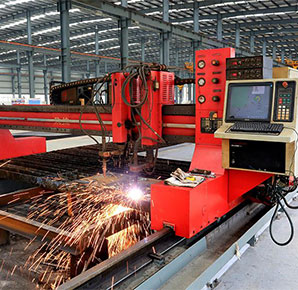 Flame cutting, also called oxyfuel cutting, is a common machining method for heavy plate.
Flame Cutting
-
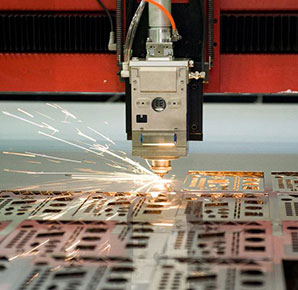 Plasma cutting is a process that cuts through electrically conductive materials by means of an accelerated jet of hot plasma.
Plasma Cutting
-
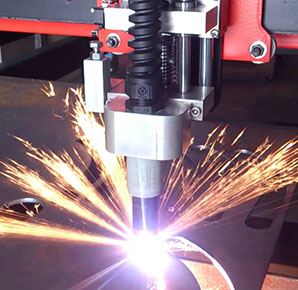 Basically when cutting with the laser, the beam is focused on the material through the hole in the nozzle.
Laser Cutting
-
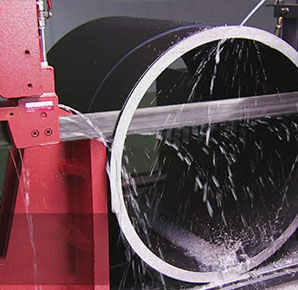 According to the form of the tool, sawing/ saw cutting is divided into bow sawing, circular sawing, band sawing and sawing of the grinding wheel.
Saw Cutting
Latest Products
-
 Machining involved: plasma cutting, grinding, polishing Application: construction
Stainless Steel Cutting Parts
-
 Material: carbon steel Machining involved: flame cutting, stamping, sheet metal, grinding Application: manfuacturing
Heavy Plates Cutting Parts
-
 Carbon steel I-beams can be used in engineering construction, structural building , bridges and ships construction. Machining...
I-beam Steel Manufacturing
-
 Customized Heavy Plates Cutting Parts are for Engineering Machinery. Material: carbon steel Machining involved: flame cutting...
Customized Heavy Plates Cutting Parts
-
 Our products cover the fields of construction machinery, power systems, material handling and transportation machinery, metall...
Carbon Steel Pipes
-
 Material: stainless steel. Laser cutting: high precision, fastest cutting method, suitable for cutting iron steel within 20mm....
Automobile Steel Parts
-
 Shape: customized. Custom is our specialty, materials and finish coating can be various.
Metal Steel Plate Customized Machining
-
 Katalor can provide a wide range of laser cutting, plasma cutting, flame cutting or steel machining parts fabrication. Flame ...
Heavy Plates Flame Cutting
CONTACT US
No limited to time and space, you can call for our online-service personnel for consultation, or fill in the table below for an enquiry. Your message will be promptly resolved.
- Tel:+86-21-61182423
- Fax:+86-21-61182425
- E-mail:[email protected]
- Skype:shanghai.katalor
- Address:Unit 6,lane 2500,xiupu Road,Kangqiao Industrial Area,Pudong New District,Shanghai
- Online Consultation
- After-sales Engineer