


Seamless steel pipe cutting: avoiding cut defects
2026-07-31
Seamless steel pipes are widely used in steel structures, machining, pipeline engineering, and building materials processing. Cutting is the first step in the deep processing of pipes, and the smoothness and dimensional accuracy of the cut directly affect the quality of subsequent welding, assembly, and anti-corrosion construction. Many processing plants often encounter problems such as burrs on the cut, pipe wall collapse, dimensional deviations, cracks, and oxidation burning when cutting seamless pipes. This not only wastes pipe materials but also increases the labor costs of grinding and correction, and in severe cases, directly leads to the scrapping of finished products. Based on practical experience in large-scale pipe processing, this paper summarizes the core points to note in the entire process of seamless pipe cutting, standardizing operations from multiple dimensions, including equipment selection, pipe fixing, cutting parameters, and post-processing.
First, select the appropriate cutting equipment based on the seamless pipe's material and wall thickness. For 20# and 45# ordinary carbon steel seamless pipes with a wall thickness of 3mm or less, a high-speed metal circular saw can be used for high batch processing efficiency. For Q345B, Q345D/E low-temperature alloy seamless pipes and stainless steel seamless pipes, ordinary flame cutting is strictly prohibited. The high temperature of the flame will change the metallographic structure of the pipe, creating a hardened layer at the cut, which makes welding prone to cracking. Plasma cutting, CNC sawing, and laser cutting are recommended. For seamless pipes with a wall thickness exceeding 10mm, CNC band saws are preferred, as they provide uniform cutting force and are less prone to pipe wall deformation. Thin-walled seamless pipes should never be manually cut with an angle grinder, as high-speed grinding vibration can easily cause the pipe end to become elliptical or collapse, significantly reducing the dimensional accuracy of the pipe.
Pipe clamping and securing are crucial for minimizing deformation. Before cutting, clean the outer wall of the steel pipe to remove rust, burrs, and weld beads, ensuring a tight, gap-free fit between the clamp and the pipe. Secure pipes of different lengths separately. The length of a single pipe extending beyond the cutting edge should not be excessive; if it exceeds 20cm from the clamp, additional support is required to prevent the pipe from drooping and vibrating. Before batch cutting, uniformly calibrate the ruler and allow for machining allowances. For precision pipes with length tolerances within ±0.5mm, do not cut directly to the marked dimensions; allow for 0.3-1mm for grinding correction. During cutting, feed the saw blade at a uniform speed, avoiding excessive speed. High-speed cutting generates high temperatures due to friction, which can cause localized overheating of the pipe wall, leading to annealing and softening, and causing thin-walled pipes to dent and deform. Simultaneously, continuously add cutting coolant to dissipate cutting heat, reduce saw blade wear, and minimize oxide buildup at the cut.
After cutting, high-temperature pipes should not be moved immediately. They should be allowed to cool and stand before being transported. Special attention should be paid to removing burrs and oxide layers from the cut edges. Burrs on the inner side of carbon steel seamless pipe cuts must be cleaned with a chamfering machine, ensuring uniform inner and outer bevels to facilitate subsequent welding fusion. After cutting alloy seamless pipes, the surface hardened layer should be ground off to prevent cold cracking during welding. Processed pipes should be sorted and stacked separately, with different specifications and materials stacked separately. Cut edges should be protected to avoid bumps and scratches. Strictly following these cutting specifications can reduce pipe waste by more than 5%, while also reducing secondary grinding processes and improving the overall processing efficiency of seamless pipes.
First, select the appropriate cutting equipment based on the seamless pipe's material and wall thickness. For 20# and 45# ordinary carbon steel seamless pipes with a wall thickness of 3mm or less, a high-speed metal circular saw can be used for high batch processing efficiency. For Q345B, Q345D/E low-temperature alloy seamless pipes and stainless steel seamless pipes, ordinary flame cutting is strictly prohibited. The high temperature of the flame will change the metallographic structure of the pipe, creating a hardened layer at the cut, which makes welding prone to cracking. Plasma cutting, CNC sawing, and laser cutting are recommended. For seamless pipes with a wall thickness exceeding 10mm, CNC band saws are preferred, as they provide uniform cutting force and are less prone to pipe wall deformation. Thin-walled seamless pipes should never be manually cut with an angle grinder, as high-speed grinding vibration can easily cause the pipe end to become elliptical or collapse, significantly reducing the dimensional accuracy of the pipe.
Pipe clamping and securing are crucial for minimizing deformation. Before cutting, clean the outer wall of the steel pipe to remove rust, burrs, and weld beads, ensuring a tight, gap-free fit between the clamp and the pipe. Secure pipes of different lengths separately. The length of a single pipe extending beyond the cutting edge should not be excessive; if it exceeds 20cm from the clamp, additional support is required to prevent the pipe from drooping and vibrating. Before batch cutting, uniformly calibrate the ruler and allow for machining allowances. For precision pipes with length tolerances within ±0.5mm, do not cut directly to the marked dimensions; allow for 0.3-1mm for grinding correction. During cutting, feed the saw blade at a uniform speed, avoiding excessive speed. High-speed cutting generates high temperatures due to friction, which can cause localized overheating of the pipe wall, leading to annealing and softening, and causing thin-walled pipes to dent and deform. Simultaneously, continuously add cutting coolant to dissipate cutting heat, reduce saw blade wear, and minimize oxide buildup at the cut.
After cutting, high-temperature pipes should not be moved immediately. They should be allowed to cool and stand before being transported. Special attention should be paid to removing burrs and oxide layers from the cut edges. Burrs on the inner side of carbon steel seamless pipe cuts must be cleaned with a chamfering machine, ensuring uniform inner and outer bevels to facilitate subsequent welding fusion. After cutting alloy seamless pipes, the surface hardened layer should be ground off to prevent cold cracking during welding. Processed pipes should be sorted and stacked separately, with different specifications and materials stacked separately. Cut edges should be protected to avoid bumps and scratches. Strictly following these cutting specifications can reduce pipe waste by more than 5%, while also reducing secondary grinding processes and improving the overall processing efficiency of seamless pipes.
CUTTING METHOD

-
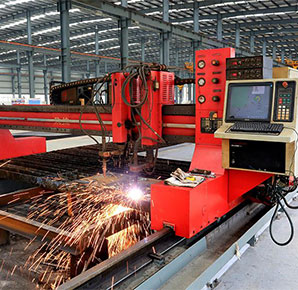 Flame cutting, also called oxyfuel cutting, is a common machining method for heavy plate.
Flame Cutting
-
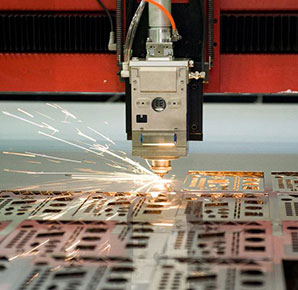 Plasma cutting is a process that cuts through electrically conductive materials by means of an accelerated jet of hot plasma.
Plasma Cutting
-
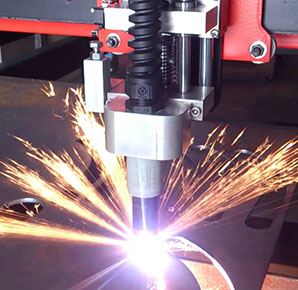 Basically when cutting with the laser, the beam is focused on the material through the hole in the nozzle.
Laser Cutting
-
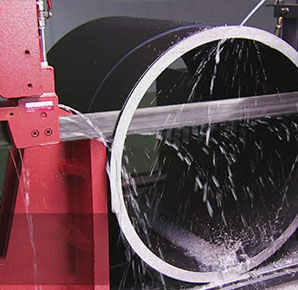 According to the form of the tool, sawing/ saw cutting is divided into bow sawing, circular sawing, band sawing and sawing of the grinding wheel.
Saw Cutting
Latest Products
-
 Material: stainless steel Machining involved: flame cutting, polishing
Stainless Steel Seamless Tubes Cutting
-
 Machining involved: flame cutting, beveling Application: engineering and ships building
Mild Steel Heavy Plates Cutting
-
 Material: stainless steel Machining involved: plasma cutting, grinding, polishing
Plasma Cutting Stainless Steel Plate
-
 Our products cover the fields of construction machinery, power systems, material handling and transportation machinery, metall...
Carbon Steel Pipes
-
 Application: ships building, construction. Katalor can provide a wide range of laser cutting, plasma cutting, flame cutting or...
Mild Steel Angle Cutting Parts
-
 Machining involved: cutting, bending, drilling, surface treatment
Cutting Alloy Steel Equal Angles
-
 Katalor can provide a wide range of laser cutting, plasma cutting, flame cutting or steel machining parts fabrication. Flame ...
Heavy Plates Flame Cutting
-
 Machining involved: saw cutting, grinding, surface treatment
Carbon Steel Bars Customized Cutting
CONTACT US
No limited to time and space, you can call for our online-service personnel for consultation, or fill in the table below for an enquiry. Your message will be promptly resolved.
- Tel:+86-21-61182423
- Fax:+86-21-61182425
- E-mail:[email protected]
- Skype:shanghai.katalor
- Address:Unit 6,lane 2500,xiupu Road,Kangqiao Industrial Area,Pudong New District,Shanghai
- Online Consultation
- After-sales Engineer