


Application of Ultrasonic Cutting Technology in Flexible Materials and the Food Industry
2026-08-26
Ultrasonic cutting applies high-frequency blade vibration (typically 20–40 kHz) to sever materials with minimal force and deformation. This “micro-sawing” action is particularly transformative for flexible materials and heat-sensitive food products that resist clean separation by conventional blades.
Experimental data quantifies the force reduction. A prototype ultrasonic hand cutter operating at 27,888 Hz with 36 μm amplitude reduced cutting force by 34.5% for cheese and 59.4% for ham compared to unexcited cutting. For bakery products, increasing the maximum vibration speed at the cutting edge produces a proportional reduction in separation force, with the magnitude of reduction depending on each material’s specific mechanical properties.
Quality outcomes distinguish ultrasonic from conventional cutting. In fresh-cut apple trials, ultrasonic cutting at 30–50% amplitude yielded denser, smoother surfaces with less cell damage than control cuts. Polyphenol oxidase (PPO) activity was lower in ultrasonic-cut samples, indicating reduced browning during 2-week refrigeration storage. For flexible materials, the vibrating blade simultaneously cuts and seals synthetic fabric edges, preventing fraying without the deformation caused by mechanical pressing.
The limitations are practical: capital costs are higher than conventional cutting systems, and parameters must be tuned per material. Yet for sticky, compressible, or multi-layered products where appearance and yield matter, ultrasonic cutting offers a precision that traditional blades cannot match.
Experimental data quantifies the force reduction. A prototype ultrasonic hand cutter operating at 27,888 Hz with 36 μm amplitude reduced cutting force by 34.5% for cheese and 59.4% for ham compared to unexcited cutting. For bakery products, increasing the maximum vibration speed at the cutting edge produces a proportional reduction in separation force, with the magnitude of reduction depending on each material’s specific mechanical properties.
Quality outcomes distinguish ultrasonic from conventional cutting. In fresh-cut apple trials, ultrasonic cutting at 30–50% amplitude yielded denser, smoother surfaces with less cell damage than control cuts. Polyphenol oxidase (PPO) activity was lower in ultrasonic-cut samples, indicating reduced browning during 2-week refrigeration storage. For flexible materials, the vibrating blade simultaneously cuts and seals synthetic fabric edges, preventing fraying without the deformation caused by mechanical pressing.
The limitations are practical: capital costs are higher than conventional cutting systems, and parameters must be tuned per material. Yet for sticky, compressible, or multi-layered products where appearance and yield matter, ultrasonic cutting offers a precision that traditional blades cannot match.
CUTTING METHOD

-
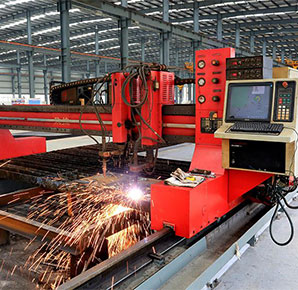 Flame cutting, also called oxyfuel cutting, is a common machining method for heavy plate.
Flame Cutting
-
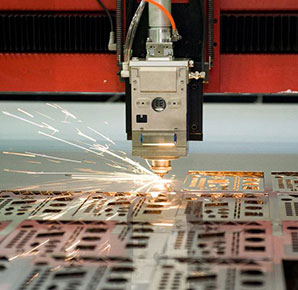 Plasma cutting is a process that cuts through electrically conductive materials by means of an accelerated jet of hot plasma.
Plasma Cutting
-
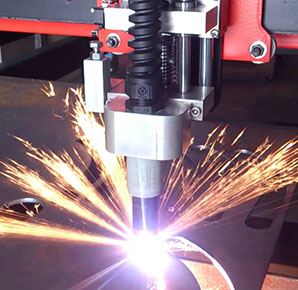 Basically when cutting with the laser, the beam is focused on the material through the hole in the nozzle.
Laser Cutting
-
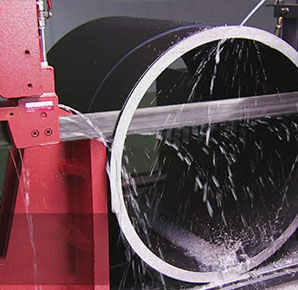 According to the form of the tool, sawing/ saw cutting is divided into bow sawing, circular sawing, band sawing and sawing of the grinding wheel.
Saw Cutting
Latest Products
-
 Special Shaped Steel Cutting is for Construction.
Special Shaped Steel Cutting for Construction
-
 Material: carbon steel Machining involved: flame cutting, stamping, sheet metal, grinding Application: manfuacturing
Heavy Plates Cutting Parts
-
 Katalor can provide a wide range of laser cutting, plasma cutting, flame cutting or steel machining parts fabrication. Flame ...
Heavy Plates Flame Cutting
-
 Material: stainless steel Machining involved: flame cutting, polishing
Stainless Steel Seamless Tubes Cutting
-
 Carbon steel I-beams can be used in engineering construction, structural building , bridges and ships construction. Machining...
I-beam Steel Manufacturing
-
 Our products cover the fields of construction machinery, power systems, material handling and transportation machinery, metall...
Carbon Steel Pipes
-
 Machining involved: cutting, grinding, beveling Application: shipsbuilding and marine industry
Carbon Steel Pipes Cutting
-
 Application: ships building, construction. Katalor can provide a wide range of laser cutting, plasma cutting, flame cutting or...
Mild Steel Angle Cutting Parts
CONTACT US
No limited to time and space, you can call for our online-service personnel for consultation, or fill in the table below for an enquiry. Your message will be promptly resolved.
- Tel:+86-21-61182423
- Fax:+86-21-61182425
- E-mail:[email protected]
- Skype:shanghai.katalor
- Address:Unit 6,lane 2500,xiupu Road,Kangqiao Industrial Area,Pudong New District,Shanghai
- Online Consultation
- After-sales Engineer