


Selection of Cutting Methods for Mill Liners
2026-04-17
During the maintenance and repair of grinding mills, the cutting of liners constitutes a critical step. The choice of cutting method directly impacts cutting efficiency, cost, and subsequent installation and operational performance.
Currently, oxy-fuel cutting and hydraulic cutting are two commonly employed methods, each possessing distinct characteristics and being suitable for different scenarios. Oxy-fuel cutting is best suited for applications involving greater material thickness where high cutting speed is not a primary requirement, whereas hydraulic cutting is ideal for liners of moderate thickness that demand high cutting precision.
Characteristics and Applications of Oxy-Fuel Cutting:
Oxy-fuel cutting is a method of severing metal materials by utilizing a high-temperature flame generated by the combustion of a mixture of oxygen and a combustible gas (such as acetylene). This cutting method features simple equipment and ease of operation, making it particularly suitable for mill liners of substantial thickness. Due to the significant amount of heat generated during the process, cutting tasks can be completed within a relatively short timeframe. However, the cutting precision of the oxy-fuel method is comparatively lower, and it tends to create a substantial heat-affected zone, which may lead to alterations in the material properties of the liner. Consequently, oxy-fuel cutting serves as a suitable choice in scenarios where high cutting precision is not strictly required or where the impact on material properties is negligible.
Characteristics and Applications of Hydraulic Cutting:
Hydraulic cutting is a method of severing metal materials by utilizing high-pressure fluid—typically water or oil—as a power source, applied through specialized cutting tools. Compared to oxy-fuel cutting, hydraulic cutting offers superior cutting precision and generates a significantly smaller heat-affected zone. Since the heat generated during the hydraulic cutting process is minimal, its impact on the material's properties is correspondingly slight. Furthermore, hydraulic cutting can be automated, thereby enhancing operational efficiency. However, hydraulic cutting equipment entails higher capital costs and places relatively higher demands on the technical skills of the operators. Therefore, for the cutting of mill liners that are of moderate thickness and require a high degree of precision, hydraulic cutting represents a more ideal choice.
Currently, oxy-fuel cutting and hydraulic cutting are two commonly employed methods, each possessing distinct characteristics and being suitable for different scenarios. Oxy-fuel cutting is best suited for applications involving greater material thickness where high cutting speed is not a primary requirement, whereas hydraulic cutting is ideal for liners of moderate thickness that demand high cutting precision.
Characteristics and Applications of Oxy-Fuel Cutting:
Oxy-fuel cutting is a method of severing metal materials by utilizing a high-temperature flame generated by the combustion of a mixture of oxygen and a combustible gas (such as acetylene). This cutting method features simple equipment and ease of operation, making it particularly suitable for mill liners of substantial thickness. Due to the significant amount of heat generated during the process, cutting tasks can be completed within a relatively short timeframe. However, the cutting precision of the oxy-fuel method is comparatively lower, and it tends to create a substantial heat-affected zone, which may lead to alterations in the material properties of the liner. Consequently, oxy-fuel cutting serves as a suitable choice in scenarios where high cutting precision is not strictly required or where the impact on material properties is negligible.
Characteristics and Applications of Hydraulic Cutting:
Hydraulic cutting is a method of severing metal materials by utilizing high-pressure fluid—typically water or oil—as a power source, applied through specialized cutting tools. Compared to oxy-fuel cutting, hydraulic cutting offers superior cutting precision and generates a significantly smaller heat-affected zone. Since the heat generated during the hydraulic cutting process is minimal, its impact on the material's properties is correspondingly slight. Furthermore, hydraulic cutting can be automated, thereby enhancing operational efficiency. However, hydraulic cutting equipment entails higher capital costs and places relatively higher demands on the technical skills of the operators. Therefore, for the cutting of mill liners that are of moderate thickness and require a high degree of precision, hydraulic cutting represents a more ideal choice.
CUTTING METHOD

-
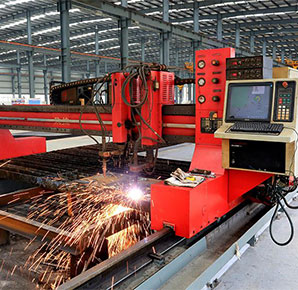 Flame cutting, also called oxyfuel cutting, is a common machining method for heavy plate.
Flame Cutting
-
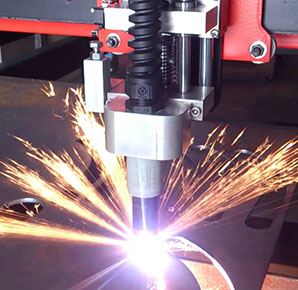
 Plasma cutting is a process that cuts through electrically conductive materials by means of an accelerated jet of hot plasma.
Plasma Cutting
-
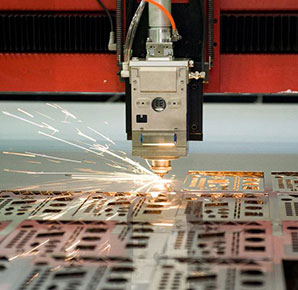
 Basically when cutting with the laser, the beam is focused on the material through the hole in the nozzle.
Laser Cutting
-
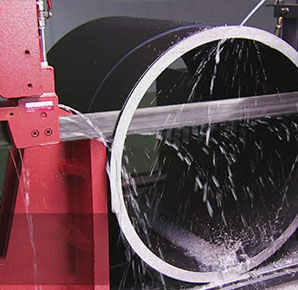 According to the form of the tool, sawing/ saw cutting is divided into bow sawing, circular sawing, band sawing and sawing of the grinding wheel.
Saw Cutting
Latest Products
-
 Machining involved: cutting, grinding
Metal Steel Cutting for Construction Machinery
-
 Material: stainless steel Machining involved: plasma cutting, grinding, polishing
Plasma Cutting Stainless Steel Plate
-
 Special Shaped Steel Cutting is for Construction.
Special Shaped Steel Cutting for Construction
-
 Customized Heavy Plates Cutting Parts are for Engineering Machinery. Material: carbon steel Machining involved: flame cutting...
Customized Heavy Plates Cutting Parts
-
 Machining involved: saw cutting, grinding, surface treatment
Carbon Steel Bars Customized Cutting
-
 Material: stainless steel 304 Machining involved: cutting, grinding, drilling, beveling, surface treatment
Stainless Steel Tube Machining Parts
-
 Material: stainless steel. Laser cutting: high precision, fastest cutting method, suitable for cutting iron steel within 20mm....
Automobile Steel Parts
-
 Machining involved: saw cutting, grinding, surface treatment
Saw Cutting for Alloy Steel Bars
CONTACT US
No limited to time and space, you can call for our online-service personnel for consultation, or fill in the table below for an enquiry. Your message will be promptly resolved.
- Tel:+86-21-61182423
- Fax:+86-21-61182425
- E-mail:[email protected]
- Skype:shanghai.katalor
- Address:Unit 6,lane 2500,xiupu Road,Kangqiao Industrial Area,Pudong New District,Shanghai
- Online Consultation
- After-sales Engineer