


Cutting Conditions for Marine Steel Plates
2026-04-30
Marine steel plates are widely used in shipbuilding, particularly grades such as AH36, DH36, and EH36. Cutting is essential in shaping these plates into key structural components, including hull sections, decks, bulkheads, stiffeners, and transverse frames. Accurate cutting ensures proper assembly, which directly affects the vessel’s strength and durability.
Several cutting techniques are applied depending on plate thickness and precision requirements. Oxy-fuel cutting is commonly used for thick plates due to its efficiency and cost-effectiveness, while plasma cutting offers higher speed and better edge quality for medium-thickness materials. Laser cutting is suitable for thinner plates and detailed components, delivering high precision with minimal distortion.
Temperature control is critical when cutting marine steel plates. Excessive heat input can lead to large heat-affected zones (HAZ), resulting in microstructural changes and reduced toughness. Preheating may be required for thicker plates or higher-strength steels to prevent cracking, while controlled cooling helps maintain the desired mechanical properties.
Mechanical properties such as strength, toughness, and ductility must be preserved during cutting. Improper techniques can introduce residual stresses or surface defects, which may compromise structural integrity. Therefore, selecting appropriate cutting parameters ensures that marine steel components meet strict safety and performance standards.
Several cutting techniques are applied depending on plate thickness and precision requirements. Oxy-fuel cutting is commonly used for thick plates due to its efficiency and cost-effectiveness, while plasma cutting offers higher speed and better edge quality for medium-thickness materials. Laser cutting is suitable for thinner plates and detailed components, delivering high precision with minimal distortion.
Temperature control is critical when cutting marine steel plates. Excessive heat input can lead to large heat-affected zones (HAZ), resulting in microstructural changes and reduced toughness. Preheating may be required for thicker plates or higher-strength steels to prevent cracking, while controlled cooling helps maintain the desired mechanical properties.
Mechanical properties such as strength, toughness, and ductility must be preserved during cutting. Improper techniques can introduce residual stresses or surface defects, which may compromise structural integrity. Therefore, selecting appropriate cutting parameters ensures that marine steel components meet strict safety and performance standards.
CUTTING METHOD

-
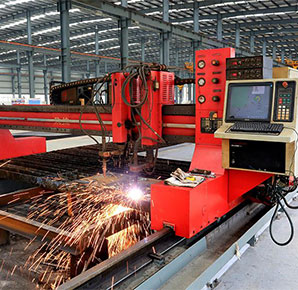 Flame cutting, also called oxyfuel cutting, is a common machining method for heavy plate.
Flame Cutting
-
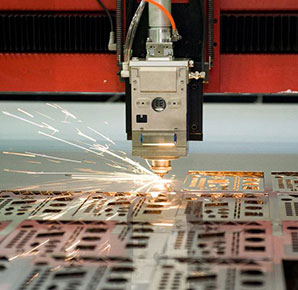 Plasma cutting is a process that cuts through electrically conductive materials by means of an accelerated jet of hot plasma.
Plasma Cutting
-
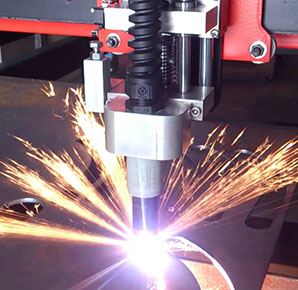 Basically when cutting with the laser, the beam is focused on the material through the hole in the nozzle.
Laser Cutting
-
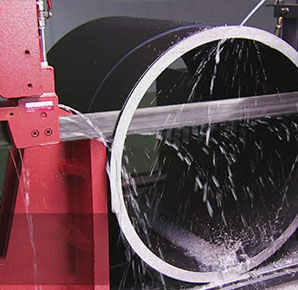 According to the form of the tool, sawing/ saw cutting is divided into bow sawing, circular sawing, band sawing and sawing of the grinding wheel.
Saw Cutting
Latest Products
-
 Material: carbon steel Machining involved: flame cutting, stamping, sheet metal, grinding Application: manfuacturing
Heavy Plates Cutting Parts
-
 Carbon steel I-beams can be used in engineering construction, structural building , bridges and ships construction. Machining...
I-beam Steel Manufacturing
-
 Katalor can provide a wide range of laser cutting, plasma cutting, flame cutting or steel machining parts fabrication.Carbon S...
Carbon Steel Ellipsoidal Head with Cutting Hol
-
 Material: carbon steel. Machining involved: saw cutting; Whole inspection procedures (IQC, PQC and FQC) and QA plan are carri...
Square Pipes Cutting
-
 Application: ships building, construction. Katalor can provide a wide range of laser cutting, plasma cutting, flame cutting or...
Mild Steel Angle Cutting Parts
-
 Special Shaped Steel Cutting is for Construction.
Special Shaped Steel Cutting for Construction
-
 Machining involved: flame cutting, beveling Application: engineering and ships building
Mild Steel Heavy Plates Cutting
-
 Machining involved: cutting, bending, drilling, surface treatment
Cutting Alloy Steel Equal Angles
CONTACT US
No limited to time and space, you can call for our online-service personnel for consultation, or fill in the table below for an enquiry. Your message will be promptly resolved.
- Tel:+86-21-61182423
- Fax:+86-21-61182425
- E-mail:[email protected]
- Skype:shanghai.katalor
- Address:Unit 6,lane 2500,xiupu Road,Kangqiao Industrial Area,Pudong New District,Shanghai
- Online Consultation
- After-sales Engineer