


What Cutting Technologies Are Required for Shipbuilding?
2026-04-30
Shipbuilding relies heavily on precise cutting technologies to shape marine-grade steel into structural components. Common materials include AH36, DH36, and EH36 steels, which are valued for their strength, toughness, and corrosion resistance. Because these steels are thick and durable, specialized cutting methods are required to maintain accuracy and efficiency while minimizing deformation.
One widely used technology is flame cutting (oxy-fuel cutting), ideal for thick carbon steels. It offers cost-effectiveness and is suitable for cutting large plates used in hull construction. Plasma cutting is another key method, providing higher speed and better precision, especially for medium-thickness plates and complex shapes.
Laser cutting is increasingly applied in shipbuilding for thinner steel sections and components requiring high accuracy. It produces clean edges with minimal الحاجة for post-processing, making it suitable for intricate parts such as brackets and stiffeners. Waterjet cutting is also used when heat-affected zones must be avoided, preserving the material’s mechanical properties.
Various ship components require cutting, including hull plates, decks, bulkheads, and internal structural reinforcements. Precision in cutting ensures proper fit-up during assembly, which is critical for structural integrity and safety.
Overall, selecting the right cutting technology depends on steel thickness, component complexity, and quality requirements, ensuring efficient and reliable ship construction.
One widely used technology is flame cutting (oxy-fuel cutting), ideal for thick carbon steels. It offers cost-effectiveness and is suitable for cutting large plates used in hull construction. Plasma cutting is another key method, providing higher speed and better precision, especially for medium-thickness plates and complex shapes.
Laser cutting is increasingly applied in shipbuilding for thinner steel sections and components requiring high accuracy. It produces clean edges with minimal الحاجة for post-processing, making it suitable for intricate parts such as brackets and stiffeners. Waterjet cutting is also used when heat-affected zones must be avoided, preserving the material’s mechanical properties.
Various ship components require cutting, including hull plates, decks, bulkheads, and internal structural reinforcements. Precision in cutting ensures proper fit-up during assembly, which is critical for structural integrity and safety.
Overall, selecting the right cutting technology depends on steel thickness, component complexity, and quality requirements, ensuring efficient and reliable ship construction.
CUTTING METHOD

-
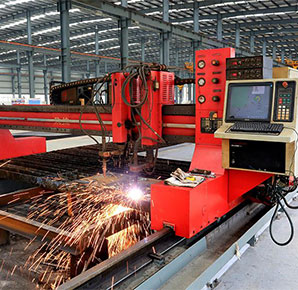 Flame cutting, also called oxyfuel cutting, is a common machining method for heavy plate.
Flame Cutting
-
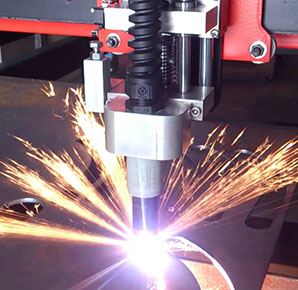
 Plasma cutting is a process that cuts through electrically conductive materials by means of an accelerated jet of hot plasma.
Plasma Cutting
-
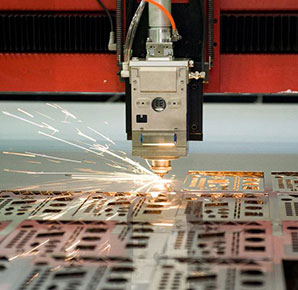
 Basically when cutting with the laser, the beam is focused on the material through the hole in the nozzle.
Laser Cutting
-
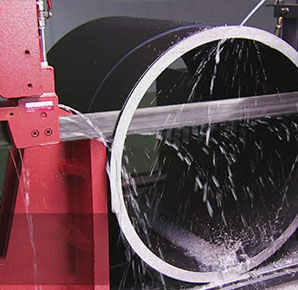 According to the form of the tool, sawing/ saw cutting is divided into bow sawing, circular sawing, band sawing and sawing of the grinding wheel.
Saw Cutting
Latest Products
-
 Our products cover the fields of construction machinery, power systems, material handling and transportation machinery, metall...
Carbon Steel Pipes
-
 Machining involved: saw cutting, grinding, surface treatment
Carbon Steel Bars Customized Cutting
-
 Machining involved: saw cutting, grinding, surface treatment Application: construction structure
Profile Steel Cutting
-
 Our products cover the fields of construction machinery, power systems, material handling and transportation machinery, metall...
Stainless Steel Plates Cutting
-
 Material: carbon steel Machining involved: flame cutting, stamping, sheet metal, grinding Application: manfuacturing
Heavy Plates Cutting Parts
-
 Material: stainless steel. Laser cutting: high precision, fastest cutting method, suitable for cutting iron steel within 20mm....
Automobile Steel Parts
-
 Machining involved: saw cutting, grinding, surface treatment
Saw Cutting for Alloy Steel Bars
-
 Material: stainless steel 304 Machining involved: cutting, grinding, drilling, beveling, surface treatment
Stainless Steel Tube Machining Parts
CONTACT US
No limited to time and space, you can call for our online-service personnel for consultation, or fill in the table below for an enquiry. Your message will be promptly resolved.
- Tel:+86-21-61182423
- Fax:+86-21-61182425
- E-mail:[email protected]
- Skype:shanghai.katalor
- Address:Unit 6,lane 2500,xiupu Road,Kangqiao Industrial Area,Pudong New District,Shanghai
- Online Consultation
- After-sales Engineer