


Cutting Processes for Thick Steel Plates
2026-06-01
When fabricating heavy industrial components, cutting thick steel plates accurately is both a challenge and a necessity. Thicknesses above 50 mm demand robust processes that balance speed, edge quality, and heat control.
Oxy-Fuel Cutting remains the most widely used method for plates from 50 mm up to 300 mm. Operating at temperatures near 980°C, oxy-fuel uses a chemical reaction between pure oxygen and iron to cut. For a 100 mm carbon steel plate, typical cutting speeds range from 150 to 250 mm/min, with kerf widths of 3–6 mm. While tolerances are moderate (±1.5 mm), capital equipment costs are low, making it economical for very thick sections. However, oxy-fuel produces a significant heat-affected zone (HAZ) of 2–4 mm and requires post-cut cleaning.
Plasma Cutting, particularly high-definition plasma, is effective for plates up to 80 mm. At 50 mm thickness, cutting speeds reach 300–500 mm/min – approximately double that of oxy-fuel. Tolerance improves to ±0.8 mm with narrower kerf (1.5–2.5 mm). The HAZ is also shallower (0.8–1.5 mm). However, plasma equipment costs are higher, and consumable life shortens as thickness increases.
Laser Cutting is generally limited to plates under 40 mm due to power constraints. Above this threshold, cut quality degrades rapidly, and energy costs become prohibitive.
Waterjet Cutting offers zero HAZ and excellent edge quality on any thickness, but cutting a 75 mm plate is extremely slow (under 50 mm/min) and operating costs are high due to abrasive consumption.
Best Practice Recommendation: For carbon steel plates exceeding 75 mm, oxy-fuel provides the best cost-effectiveness. For thicknesses between 40 and 75 mm where tighter tolerances are required, high-definition plasma is the optimal choice. Waterjet should be reserved for heat-sensitive materials or applications requiring zero metallurgical alteration.
Oxy-Fuel Cutting remains the most widely used method for plates from 50 mm up to 300 mm. Operating at temperatures near 980°C, oxy-fuel uses a chemical reaction between pure oxygen and iron to cut. For a 100 mm carbon steel plate, typical cutting speeds range from 150 to 250 mm/min, with kerf widths of 3–6 mm. While tolerances are moderate (±1.5 mm), capital equipment costs are low, making it economical for very thick sections. However, oxy-fuel produces a significant heat-affected zone (HAZ) of 2–4 mm and requires post-cut cleaning.
Plasma Cutting, particularly high-definition plasma, is effective for plates up to 80 mm. At 50 mm thickness, cutting speeds reach 300–500 mm/min – approximately double that of oxy-fuel. Tolerance improves to ±0.8 mm with narrower kerf (1.5–2.5 mm). The HAZ is also shallower (0.8–1.5 mm). However, plasma equipment costs are higher, and consumable life shortens as thickness increases.
Laser Cutting is generally limited to plates under 40 mm due to power constraints. Above this threshold, cut quality degrades rapidly, and energy costs become prohibitive.
Waterjet Cutting offers zero HAZ and excellent edge quality on any thickness, but cutting a 75 mm plate is extremely slow (under 50 mm/min) and operating costs are high due to abrasive consumption.
Best Practice Recommendation: For carbon steel plates exceeding 75 mm, oxy-fuel provides the best cost-effectiveness. For thicknesses between 40 and 75 mm where tighter tolerances are required, high-definition plasma is the optimal choice. Waterjet should be reserved for heat-sensitive materials or applications requiring zero metallurgical alteration.
CUTTING METHOD

-
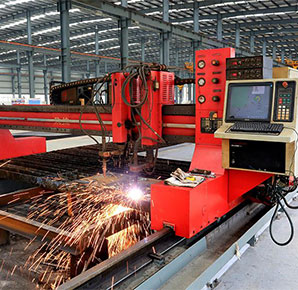 Flame cutting, also called oxyfuel cutting, is a common machining method for heavy plate.
Flame Cutting
-
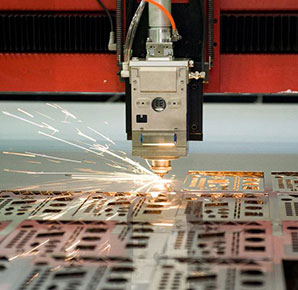 Plasma cutting is a process that cuts through electrically conductive materials by means of an accelerated jet of hot plasma.
Plasma Cutting
-
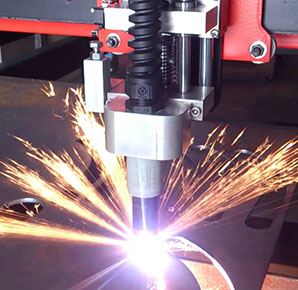 Basically when cutting with the laser, the beam is focused on the material through the hole in the nozzle.
Laser Cutting
-
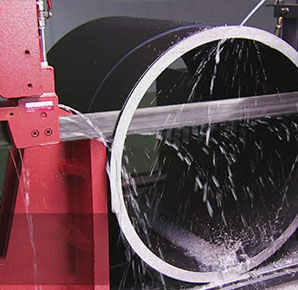 According to the form of the tool, sawing/ saw cutting is divided into bow sawing, circular sawing, band sawing and sawing of the grinding wheel.
Saw Cutting
Latest Products
-
 Machining involved: saw cutting, grinding, surface treatment Application: construction structure
Profile Steel Cutting
-
 Machining involved: saw cutting, grinding, surface treatment
Saw Cutting for Alloy Steel Bars
-
 Material: carbon steel Machining involved: flame cutting, stamping, sheet metal, grinding Application: manfuacturing
Heavy Plates Cutting Parts
-
 Machining involved: cutting, grinding, beveling Application: shipsbuilding and marine industry
Carbon Steel Pipes Cutting
-
 Machining involved: saw cutting, grinding, surface treatment
Carbon Steel Bars Customized Cutting
-
 Machining involved: plasma cutting, grinding, polishing Application: construction
Stainless Steel Cutting Parts
-
 Shape: customized. Custom is our specialty, materials and finish coating can be various.
Metal Steel Plate Customized Machining
-
 Carbon steel I-beams can be used in engineering construction, structural building , bridges and ships construction. Machining...
I-beam Steel Manufacturing
CONTACT US
No limited to time and space, you can call for our online-service personnel for consultation, or fill in the table below for an enquiry. Your message will be promptly resolved.
- Tel:+86-21-61182423
- Fax:+86-21-61182425
- E-mail:[email protected]
- Skype:shanghai.katalor
- Address:Unit 6,lane 2500,xiupu Road,Kangqiao Industrial Area,Pudong New District,Shanghai
- Online Consultation
- After-sales Engineer