


How to Minimize Heat-Affected Zone (HAZ) in Steel Plate Cutting
2026-06-01
The heat-affected zone (HAZ) is an inevitable consequence of thermal cutting processes, where elevated temperatures alter the microstructure and mechanical properties of steel adjacent to the cut edge. A large HAZ can lead to reduced toughness, increased hardness, hydrogen-induced cracking, and distortion. Quantifying and minimizing HAZ depth is therefore critical for pressure vessels, offshore structures, and high-strength steel applications.
Typical HAZ Depths by Cutting Method
Controlled studies on 20 mm carbon steel plate (ASTM A516 Grade 70) reveal significant differences:
These data demonstrate that laser cutting reduces HAZ by a factor of 5–10 compared to oxy-fuel, while waterjet completely eliminates thermal damage at the cost of slower speed.
Six Best Practices to Minimize HAZ
1. Optimize cutting speed. Increasing speed reduces heat input per unit length. For plasma cutting 12 mm steel, raising speed from 1,000 mm/min to 1,800 mm/min reduces HAZ from 1.4 mm to 0.7 mm. However, exceeding the optimal range causes poor edge squareness.
2. Reduce heat input. Calculate heat input (kJ/mm) = (Voltage × Current × 60) / (Speed × 1000). For a given thickness, target the lowest practical current and voltage while maintaining cut quality. A reduction from 2.5 kJ/mm to 1.2 kJ/mm typically halves HAZ depth.
3. Use high-definition or precision plasma systems. These systems constrict the arc with a smaller nozzle orifice and higher gas flow, concentrating energy. Comparative tests show conventional plasma at 120 A produces a 1.6 mm HAZ, while high-definition plasma at 80 A produces only 0.6 mm HAZ on the same 15 mm plate.
4. Employ proper gas selection. For plasma, using an oxygen-nitrogen mixture or argon-hydrogen reduces heat transfer compared to pure oxygen. For laser, high-pressure nitrogen (assist gas) cools the kerf faster than oxygen, limiting heat soak.
5. Apply preheating (counterintuitively). While preheating seems counterproductive, moderate preheating (150–200°C) for thick, hardenable steels reduces thermal gradient, preventing martensite formation and reducing HAZ cracking risk, though total HAZ width may increase slightly.
6. Post-cut grinding or machining. When thermal minimization reaches practical limits, removing 0.5–1.0 mm of material via grinding or light machining completely eliminates the HAZ for critical components.
Quantitative Example: A fabricator cutting 25 mm quenched-and-tempered steel (ASTM A514) switched from conventional oxy-fuel (HAZ = 3.2 mm, requiring post-cut grinding) to high-definition plasma (HAZ = 0.9 mm). This eliminated grinding on 80% of parts, reducing processing time by 35 minutes per plate and saving $12 per cut in labor.
In summary, minimizing HAZ begins with process selection: waterjet for zero thermal effect (but slow), laser for thin plates with minimal HAZ, high-definition plasma for best balance on medium thicknesses. Regardless of method, optimizing speed, heat input, and gas selection can reduce HAZ by 40–60% compared to default machine settings, directly improving weld quality and reducing post-processing costs.
Typical HAZ Depths by Cutting Method
Controlled studies on 20 mm carbon steel plate (ASTM A516 Grade 70) reveal significant differences:
| Cutting Method | HAZ Depth (mm) | Hardness Increase (HV) | Microstructural Change |
| Oxy-fuel | 2.0 – 3.5 | +40 to +60 | Coarse pearlite + Widmanstätten ferrite |
| Conventional Plasma | 1.0 – 2.0 | +30 to +50 | Fine martensite + bainite |
| High-definition Plasma | 0.5 – 1.2 | +20 to +35 | Tempered martensite |
| Fiber Laser (≤20 mm) | 0.1 – 0.4 | +5 to +15 | Minor grain refinement |
| Waterjet (Abrasive) | 0.0 (mechanical) | 0 | None |
Six Best Practices to Minimize HAZ
1. Optimize cutting speed. Increasing speed reduces heat input per unit length. For plasma cutting 12 mm steel, raising speed from 1,000 mm/min to 1,800 mm/min reduces HAZ from 1.4 mm to 0.7 mm. However, exceeding the optimal range causes poor edge squareness.
2. Reduce heat input. Calculate heat input (kJ/mm) = (Voltage × Current × 60) / (Speed × 1000). For a given thickness, target the lowest practical current and voltage while maintaining cut quality. A reduction from 2.5 kJ/mm to 1.2 kJ/mm typically halves HAZ depth.
3. Use high-definition or precision plasma systems. These systems constrict the arc with a smaller nozzle orifice and higher gas flow, concentrating energy. Comparative tests show conventional plasma at 120 A produces a 1.6 mm HAZ, while high-definition plasma at 80 A produces only 0.6 mm HAZ on the same 15 mm plate.
4. Employ proper gas selection. For plasma, using an oxygen-nitrogen mixture or argon-hydrogen reduces heat transfer compared to pure oxygen. For laser, high-pressure nitrogen (assist gas) cools the kerf faster than oxygen, limiting heat soak.
5. Apply preheating (counterintuitively). While preheating seems counterproductive, moderate preheating (150–200°C) for thick, hardenable steels reduces thermal gradient, preventing martensite formation and reducing HAZ cracking risk, though total HAZ width may increase slightly.
6. Post-cut grinding or machining. When thermal minimization reaches practical limits, removing 0.5–1.0 mm of material via grinding or light machining completely eliminates the HAZ for critical components.
Quantitative Example: A fabricator cutting 25 mm quenched-and-tempered steel (ASTM A514) switched from conventional oxy-fuel (HAZ = 3.2 mm, requiring post-cut grinding) to high-definition plasma (HAZ = 0.9 mm). This eliminated grinding on 80% of parts, reducing processing time by 35 minutes per plate and saving $12 per cut in labor.
In summary, minimizing HAZ begins with process selection: waterjet for zero thermal effect (but slow), laser for thin plates with minimal HAZ, high-definition plasma for best balance on medium thicknesses. Regardless of method, optimizing speed, heat input, and gas selection can reduce HAZ by 40–60% compared to default machine settings, directly improving weld quality and reducing post-processing costs.
CUTTING METHOD

-
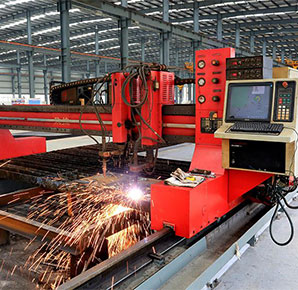 Flame cutting, also called oxyfuel cutting, is a common machining method for heavy plate.
Flame Cutting
-
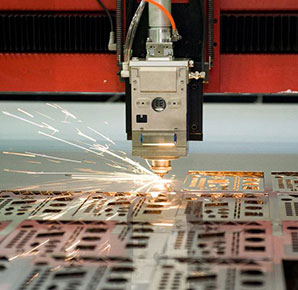 Plasma cutting is a process that cuts through electrically conductive materials by means of an accelerated jet of hot plasma.
Plasma Cutting
-
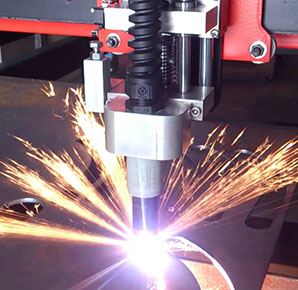 Basically when cutting with the laser, the beam is focused on the material through the hole in the nozzle.
Laser Cutting
-
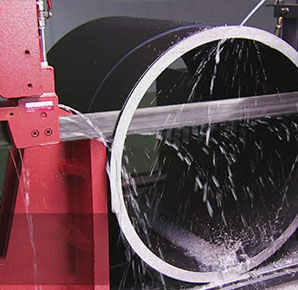 According to the form of the tool, sawing/ saw cutting is divided into bow sawing, circular sawing, band sawing and sawing of the grinding wheel.
Saw Cutting
Latest Products
-
 Special Shaped Steel Cutting is for Construction.
Special Shaped Steel Cutting for Construction
-
 Machining involved: cutting, grinding
Metal Steel Cutting for Construction Machinery
-
 Customized Heavy Plates Cutting Parts are for Engineering Machinery. Material: carbon steel Machining involved: flame cutting...
Customized Heavy Plates Cutting Parts
-
 Carbon steel I-beams can be used in engineering construction, structural building , bridges and ships construction. Machining...
I-beam Steel Manufacturing
-
 Machining involved: plasma cutting, grinding, polishing Application: construction
Stainless Steel Cutting Parts
-
 Material: carbon steel Machining involved: flame cutting, stamping, sheet metal, grinding Application: manfuacturing
Heavy Plates Cutting Parts
-
 Material: stainless steel 304 Machining involved: cutting, grinding, drilling, beveling, surface treatment
Stainless Steel Tube Machining Parts
-
 Katalor can provide a wide range of laser cutting, plasma cutting, flame cutting or steel machining parts fabrication. Flame ...
Heavy Plates Flame Cutting
CONTACT US
No limited to time and space, you can call for our online-service personnel for consultation, or fill in the table below for an enquiry. Your message will be promptly resolved.
- Tel:+86-21-61182423
- Fax:+86-21-61182425
- E-mail:[email protected]
- Skype:shanghai.katalor
- Address:Unit 6,lane 2500,xiupu Road,Kangqiao Industrial Area,Pudong New District,Shanghai
- Online Consultation
- After-sales Engineer