


What is the difference between laser cutting and flame cutting?
2026-10-12
Laser cutting and flame cutting are the two most common processes for steel plate cutting. They are not mutually exclusive alternatives; rather, each is suited to specific ranges of material thickness and required precision. Choosing the wrong process can lead to either doubled costs or substandard quality.
Thickness: Laser cutting excels with thin to medium-thickness plates, while flame cutting is the primary choice for thick plates. Fiber laser cutting is typically most economical for carbon steel up to 20mm thick; while high-power machines can handle 40–50mm, the cutting speed drops significantly. Flame cutting covers a range from 5mm to over 300mm, effectively dominating the market for plates thicker than 30mm. Using flame cutting for thin plates is counterproductive, as it results in excessive heat input, severe deformation, and slow processing speeds.
Precision: Laser cutting is a precision process, whereas flame cutting is a rough-cutting method. Laser cutting produces a narrow kerf (0.2–0.5mm), a small heat-affected zone, and a smooth cut surface, with dimensional accuracy reaching ±0.05–0.1mm—often allowing parts to be used immediately after cutting. In contrast, flame cutting produces a wide kerf (2–5mm) with an accuracy of approximately ±1–2mm; the cut surfaces typically feature an oxide layer and dross, usually requiring an additional machining allowance. Furthermore, laser cutting is capable of producing intricate contours and dense, small-diameter holes, while flame cutting is better suited for straight lines and large-scale profiles.
Cost: The choice depends on whether you are processing individual parts or large batches. Laser cutting requires a high initial investment (ranging from hundreds of thousands to millions of yuan), but it offers low unit costs and high efficiency for thin plates. For thick plates, however, the slow cutting speed and high gas consumption cause the cost per meter to quickly exceed that of flame cutting. Flame cutting requires a lower initial investment and offers a clear cost advantage for thick plates—it can even be used to cut bevels—but it is inefficient for thin plates and often incurs high downstream costs for grinding or finishing.
Conclusion: For carbon steel under 20mm, or when high precision and superior surface quality are required, choose laser cutting. For plates thicker than 30mm—typically structural components—flame cutting is the better choice. For the 20–30mm range, the decision should be based on a comprehensive assessment of batch size, required precision, and delivery deadlines. The most economical approach is often to combine both processes: using laser cutting for precision parts and flame cutting for thicker components.
CUTTING METHOD

-
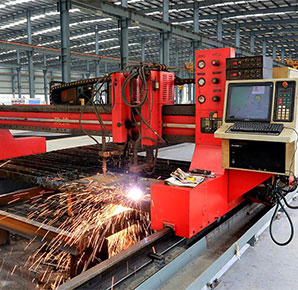 Flame cutting, also called oxyfuel cutting, is a common machining method for heavy plate.
Flame Cutting
-
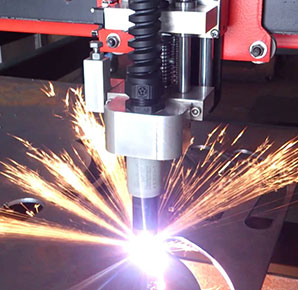
 Plasma cutting is a process that cuts through electrically conductive materials by means of an accelerated jet of hot plasma.
Plasma Cutting
-
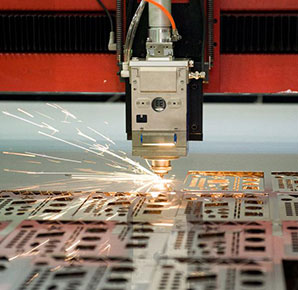
 Basically when cutting with the laser, the beam is focused on the material through the hole in the nozzle.
Laser Cutting
-
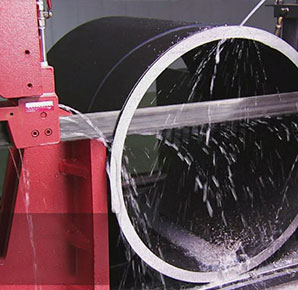 According to the form of the tool, sawing/ saw cutting is divided into bow sawing, circular sawing, band sawing and sawing of the grinding wheel.
Saw Cutting
Latest Products
-
 Our products cover the fields of construction machinery, power systems, material handling and transportation machinery, metall...
Stainless Steel Plates Cutting
-
 Carbon steel I-beams can be used in engineering construction, structural building , bridges and ships construction. Machining...
I-beam Steel Manufacturing
-
 Machining involved: cutting, grinding
Metal Steel Cutting for Construction Machinery
-
 Katalor can provide a wide range of laser cutting, plasma cutting, flame cutting or steel machining parts fabrication. Flame ...
Heavy Plates Flame Cutting
-
 Customized Steel Tube for Construction Equipped with laser cutting, CNC shearing, punching, bending, automatic riveting, auto...
Customized Steel Tube for Construction
-
 Machining involved: plasma cutting, grinding, polishing Application: construction
Stainless Steel Cutting Parts
-
 Machining involved: saw cutting, grinding, surface treatment Application: construction structure
Profile Steel Cutting
-
 Machining involved: cutting, grinding, beveling Application: shipsbuilding and marine industry
Carbon Steel Pipes Cutting
CONTACT US
No limited to time and space, you can call for our online-service personnel for consultation, or fill in the table below for an enquiry. Your message will be promptly resolved.
- Tel:+86-21-61182423
- Fax:+86-21-61182425
- E-mail:[email protected]
- Skype:shanghai.katalor
- Address:Unit 6,lane 2500,xiupu Road,Kangqiao Industrial Area,Pudong New District,Shanghai
- Online Consultation
- After-sales Engineer