


What thickness of steel plate is suitable for flame cutting?
2026-10-19
Flame cutting relies on a preheating flame to bring the steel to its ignition temperature, followed by a high-pressure oxygen stream that triggers an oxidation reaction to perform the cut. This principle imposes two inherent limitations: for very thin plates, the heat input can cause warping and edge collapse; for very thick plates, challenges arise regarding preheating penetration and maintaining the perpendicularity of the cut edge. In practical production, flame cutting is generally avoided for materials under 5mm; it is most efficient for thicknesses between 20mm and 50mm, and it remains the primary—often only—viable option for thicknesses exceeding 100mm.
The optimal processes for various thickness ranges are generally as follows:
Below 3mm: Laser cutting or shearing. Fiber laser cutting offers high speed, narrow kerf, and minimal deformation for thin sheets; for standard, regularly shaped parts produced in batches, shearing is a more cost-effective solution.
3–10mm: Fiber laser cutting is the dominant method. It achieves speeds of over ten meters per minute with a precision of ±0.05–0.1mm, allowing parts to be used immediately after cutting. In this range, flame cutting is slow, causes significant deformation, and is ultimately more expensive.
10–25mm: Medium-to-high-power laser cutting (6–12kW) remains advantageous, providing high-quality cut surfaces that require no secondary processing. If precision requirements are lower and the parts consist primarily of linear contours, CNC plasma cutting is a more economical choice.
25–50mm: This is the transition zone between laser and flame cutting. In this range, flame cutting offers stable speeds, low costs, and the ability to create bevels, making it the primary process for structural components, flanges, and heavy-plate blanking.
50–100mm: Flame cutting is essentially the only viable option. It requires the use of larger cutting nozzles and longer preheating times, with careful attention paid to kerf compensation and the perpendicularity of the cut.
Above 100mm: For extra-thick plates, flame cutting requires specialized, large-scale CNC equipment, with cutting speeds potentially as low as a few dozen millimeters per minute. If extremely high precision is required, waterjet cutting or subsequent mechanical machining may be considered. There are three key factors in the flame cutting of thick plates: preheating before cutting (materials with high carbon content or thick plates require preheating to 100–150°C to prevent cracking), maintaining a consistent distance between the cutting nozzle and the plate surface, and ensuring an oxygen purity of at least 99.5%. By mastering these aspects, the cut surface quality for plates thicker than 50 mm can reach a level that requires no further machining.
The optimal processes for various thickness ranges are generally as follows:
Below 3mm: Laser cutting or shearing. Fiber laser cutting offers high speed, narrow kerf, and minimal deformation for thin sheets; for standard, regularly shaped parts produced in batches, shearing is a more cost-effective solution.
3–10mm: Fiber laser cutting is the dominant method. It achieves speeds of over ten meters per minute with a precision of ±0.05–0.1mm, allowing parts to be used immediately after cutting. In this range, flame cutting is slow, causes significant deformation, and is ultimately more expensive.
10–25mm: Medium-to-high-power laser cutting (6–12kW) remains advantageous, providing high-quality cut surfaces that require no secondary processing. If precision requirements are lower and the parts consist primarily of linear contours, CNC plasma cutting is a more economical choice.
25–50mm: This is the transition zone between laser and flame cutting. In this range, flame cutting offers stable speeds, low costs, and the ability to create bevels, making it the primary process for structural components, flanges, and heavy-plate blanking.
50–100mm: Flame cutting is essentially the only viable option. It requires the use of larger cutting nozzles and longer preheating times, with careful attention paid to kerf compensation and the perpendicularity of the cut.
Above 100mm: For extra-thick plates, flame cutting requires specialized, large-scale CNC equipment, with cutting speeds potentially as low as a few dozen millimeters per minute. If extremely high precision is required, waterjet cutting or subsequent mechanical machining may be considered. There are three key factors in the flame cutting of thick plates: preheating before cutting (materials with high carbon content or thick plates require preheating to 100–150°C to prevent cracking), maintaining a consistent distance between the cutting nozzle and the plate surface, and ensuring an oxygen purity of at least 99.5%. By mastering these aspects, the cut surface quality for plates thicker than 50 mm can reach a level that requires no further machining.
CUTTING METHOD

-
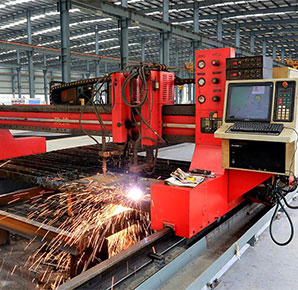 Flame cutting, also called oxyfuel cutting, is a common machining method for heavy plate.
Flame Cutting
-
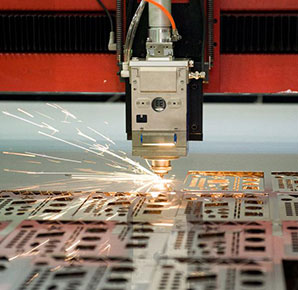 Plasma cutting is a process that cuts through electrically conductive materials by means of an accelerated jet of hot plasma.
Plasma Cutting
-
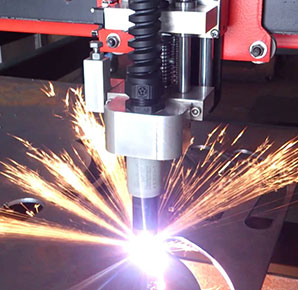 Basically when cutting with the laser, the beam is focused on the material through the hole in the nozzle.
Laser Cutting
-
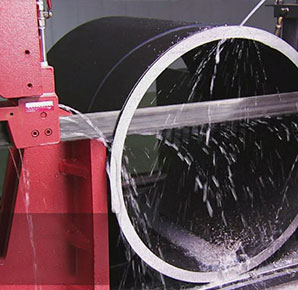 According to the form of the tool, sawing/ saw cutting is divided into bow sawing, circular sawing, band sawing and sawing of the grinding wheel.
Saw Cutting
Latest Products
-
 Our products cover the fields of construction machinery, power systems, material handling and transportation machinery, metall...
Carbon Steel Pipes
-
 Katalor can provide a wide range of laser cutting, plasma cutting, flame cutting or steel machining parts fabrication. Flame ...
Heavy Plates Flame Cutting
-
 Customized Heavy Plates Cutting Parts are for Engineering Machinery. Material: carbon steel Machining involved: flame cutting...
Customized Heavy Plates Cutting Parts
-
 Machining involved: saw cutting, grinding, surface treatment
Carbon Steel Bars Customized Cutting
-
 Carbon steel I-beams can be used in engineering construction, structural building , bridges and ships construction. Machining...
I-beam Steel Manufacturing
-
 Machining involved: flame cutting, beveling Application: engineering and ships building
Mild Steel Heavy Plates Cutting
-
 Material: carbon steel. Machining involved: saw cutting; Whole inspection procedures (IQC, PQC and FQC) and QA plan are carri...
Square Pipes Cutting
-
 Machining involved: saw cutting, grinding, surface treatment
Saw Cutting for Alloy Steel Bars
CONTACT US
No limited to time and space, you can call for our online-service personnel for consultation, or fill in the table below for an enquiry. Your message will be promptly resolved.
- Tel:+86-21-61182423
- Fax:+86-21-61182425
- E-mail:[email protected]
- Skype:shanghai.katalor
- Address:Unit 6,lane 2500,xiupu Road,Kangqiao Industrial Area,Pudong New District,Shanghai
- Online Consultation
- After-sales Engineer