


Plasma Cutting vs. Laser Cutting
2026-10-26
Plasma cutting and laser cutting are frequently compared, yet they serve different purposes: laser cutting excels in precision and edge quality, while plasma cutting offers superior adaptability to material thickness and better overall cost-effectiveness. Understanding this distinction makes the selection process straightforward.
How should you choose the right stainless steel plate for medium-to-heavy-duty applications? Consider these three key factors:
First, thickness. For stainless steel between 6–20 mm, fiber laser cutting with nitrogen gas produces an oxidation-free, bright finish—allowing parts to move directly to the next stage of production. This is the preferred method for food processing equipment and chemical vessels. For thicknesses exceeding 25 mm, laser cutting speeds drop significantly and costs rise; in such cases, plasma cutting (using nitrogen or an H35 gas mixture) offers a clear advantage in efficiency.
Second, edge quality requirements. If the application demands an oxidation-free edge suitable for immediate welding or polishing, laser cutting is virtually indispensable. If the parts will undergo subsequent machining or sandblasting, the minor dross and slight beveling typical of plasma cutting are generally acceptable.
Third, cost structure. For small-batch, high-variety production requiring high precision, laser cutting is more cost-effective. For large-batch, thick-plate structural components, plasma cutting offers a lower cost per meter. It is worth noting that plasma cutting stainless steel creates a nitrided layer, which must be ground off before welding—a "hidden" cost that is frequently overlooked.
Conclusion: For stainless steel under 20 mm where edge quality is a priority, choose laser cutting. For thicknesses over 25 mm or when working with a limited budget, opt for plasma cutting. For exceptionally thick parts that demand both high precision and an oxidation-free surface, waterjet cutting may be the right choice. Often, the optimal solution is a combination of both laser and plasma cutting, with each technology utilized for its respective ideal thickness range.
| Parameter | Laser Cutting | Plasma Cutting |
| Working thickness | Carbon steel ≤25 mm economical, up to 50 mm with high power | Most efficient at 6–50 mm, up to 100 mm+ |
| Accuracy | ±0.05–0.1 mm, kerf 0.2–0.5 mm | ±0.5–1 mm, kerf 1–3 mm |
| Cut face | Smooth, dross-free, narrow HAZ | Slight bevel and dross, requires grinding |
| Speed | Very fast on thin plate, drops sharply on thick plate | Stable on medium plate, clear advantage on thick plate |
| Cost | Higher equipment and gas cost | Lower equipment and operating cost |
How should you choose the right stainless steel plate for medium-to-heavy-duty applications? Consider these three key factors:
First, thickness. For stainless steel between 6–20 mm, fiber laser cutting with nitrogen gas produces an oxidation-free, bright finish—allowing parts to move directly to the next stage of production. This is the preferred method for food processing equipment and chemical vessels. For thicknesses exceeding 25 mm, laser cutting speeds drop significantly and costs rise; in such cases, plasma cutting (using nitrogen or an H35 gas mixture) offers a clear advantage in efficiency.
Second, edge quality requirements. If the application demands an oxidation-free edge suitable for immediate welding or polishing, laser cutting is virtually indispensable. If the parts will undergo subsequent machining or sandblasting, the minor dross and slight beveling typical of plasma cutting are generally acceptable.
Third, cost structure. For small-batch, high-variety production requiring high precision, laser cutting is more cost-effective. For large-batch, thick-plate structural components, plasma cutting offers a lower cost per meter. It is worth noting that plasma cutting stainless steel creates a nitrided layer, which must be ground off before welding—a "hidden" cost that is frequently overlooked.
Conclusion: For stainless steel under 20 mm where edge quality is a priority, choose laser cutting. For thicknesses over 25 mm or when working with a limited budget, opt for plasma cutting. For exceptionally thick parts that demand both high precision and an oxidation-free surface, waterjet cutting may be the right choice. Often, the optimal solution is a combination of both laser and plasma cutting, with each technology utilized for its respective ideal thickness range.
CUTTING METHOD

-
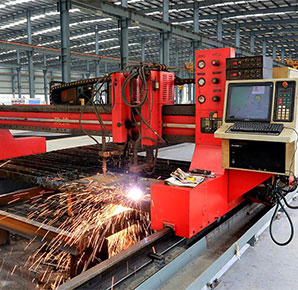 Flame cutting, also called oxyfuel cutting, is a common machining method for heavy plate.
Flame Cutting
-
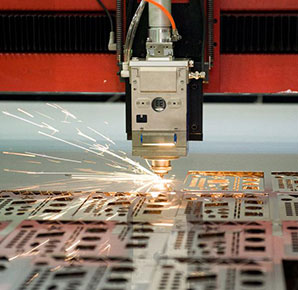 Plasma cutting is a process that cuts through electrically conductive materials by means of an accelerated jet of hot plasma.
Plasma Cutting
-
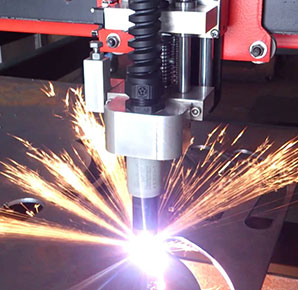 Basically when cutting with the laser, the beam is focused on the material through the hole in the nozzle.
Laser Cutting
-
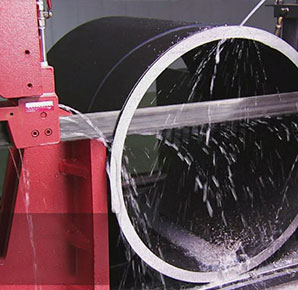 According to the form of the tool, sawing/ saw cutting is divided into bow sawing, circular sawing, band sawing and sawing of the grinding wheel.
Saw Cutting
Latest Products
-
 Our products cover the fields of construction machinery, power systems, material handling and transportation machinery, metall...
Stainless Steel Plates Cutting
-
 Customized Heavy Plates Cutting Parts are for Engineering Machinery. Material: carbon steel Machining involved: flame cutting...
Customized Heavy Plates Cutting Parts
-
 Our products cover the fields of construction machinery, power systems, material handling and transportation machinery, metall...
Carbon Steel Pipes
-
 Material: carbon steel. Machining involved: saw cutting; Whole inspection procedures (IQC, PQC and FQC) and QA plan are carri...
Square Pipes Cutting
-
 Machining involved: flame cutting, beveling Application: engineering and ships building
Mild Steel Heavy Plates Cutting
-
 Special Shaped Steel Cutting is for Construction.
Special Shaped Steel Cutting for Construction
-
 Machining involved: saw cutting, grinding, surface treatment Application: construction structure
Profile Steel Cutting
-
 Material: stainless steel 304 Machining involved: cutting, grinding, drilling, beveling, surface treatment
Stainless Steel Tube Machining Parts
CONTACT US
No limited to time and space, you can call for our online-service personnel for consultation, or fill in the table below for an enquiry. Your message will be promptly resolved.
- Tel:+86-21-61182423
- Fax:+86-21-61182425
- E-mail:[email protected]
- Skype:shanghai.katalor
- Address:Unit 6,lane 2500,xiupu Road,Kangqiao Industrial Area,Pudong New District,Shanghai
- Online Consultation
- After-sales Engineer